Carlo Griffin · 30 October 2026
Silesian Heritage Maple Documentation Projects Now Feed into National Teacher Training Modules on Urban Tree Resilience Strategies
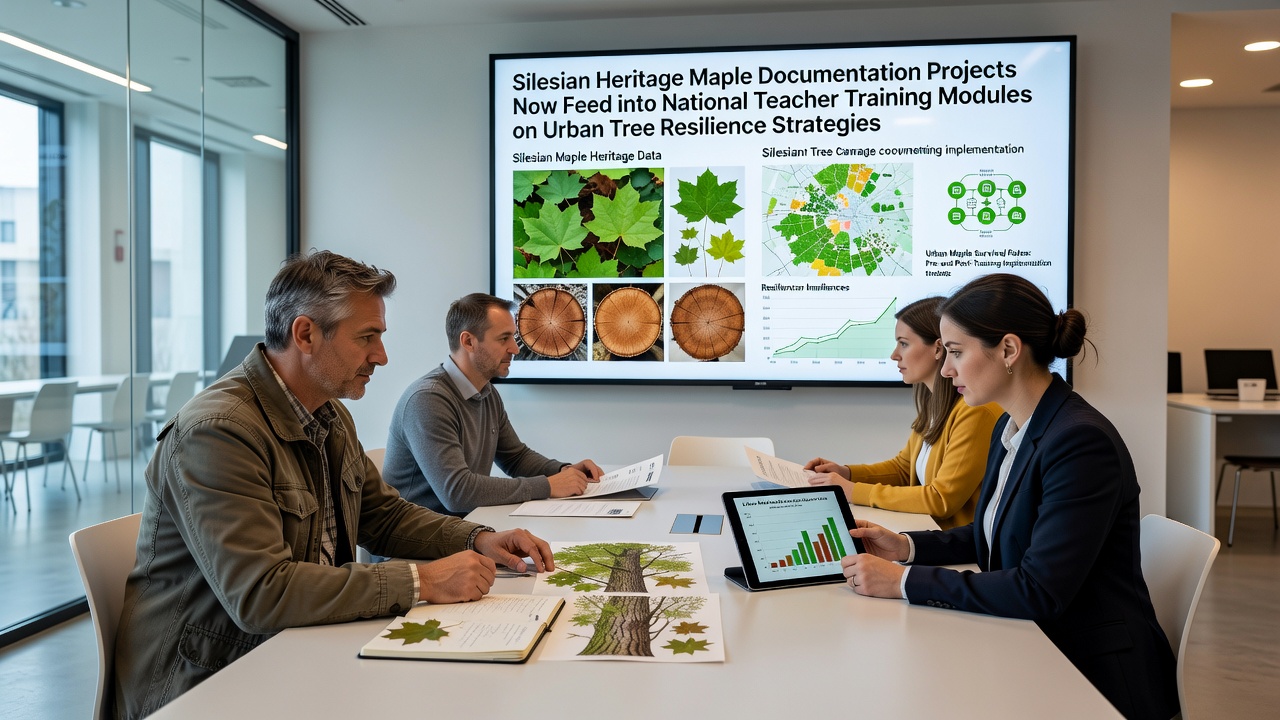
Documentation efforts centered on heritage maples across Silesia have expanded their reach into Poland's national teacher training framework, where they supply detailed case materials on urban tree resilience. Local archivists and forestry specialists began compiling records of longstanding maple populations in the 2010s, noting growth patterns, cultural associations, and responses to urban stressors such as soil compaction and temperature fluctuations. Those records now supply the core datasets for training modules that prepare educators to address similar challenges in cities nationwide.
Origins of the Silesian Documentation Work
Teams operating in Katowice, Gliwice, and surrounding municipalities catalogued individual maples that predate widespread industrialization, measuring trunk diameters, canopy coverage, and proximity to infrastructure while cross-referencing parish registers and municipal planning documents from the nineteenth century onward. The resulting inventories reveal how certain Acer platanoides and Acer pseudoplatanus specimens have persisted through coal mining expansion and post-war reconstruction. Researchers cross-checked these observations against meteorological records spanning eight decades, identifying correlations between summer heatwaves and reduced radial growth in paved environments.
Integration into National Training Modules
Education authorities incorporated the Silesian datasets into compulsory professional development courses for biology and geography teachers starting in 2024. Module designers extracted specific examples of root system adaptation and leaf phenology shifts, then paired them with simulation exercises that let trainees model future canopy loss under different climate scenarios. Participants practice mapping vulnerable street trees using the same geospatial layers developed in Silesia, while lesson plans encourage students to monitor local specimens over multiple growing seasons.
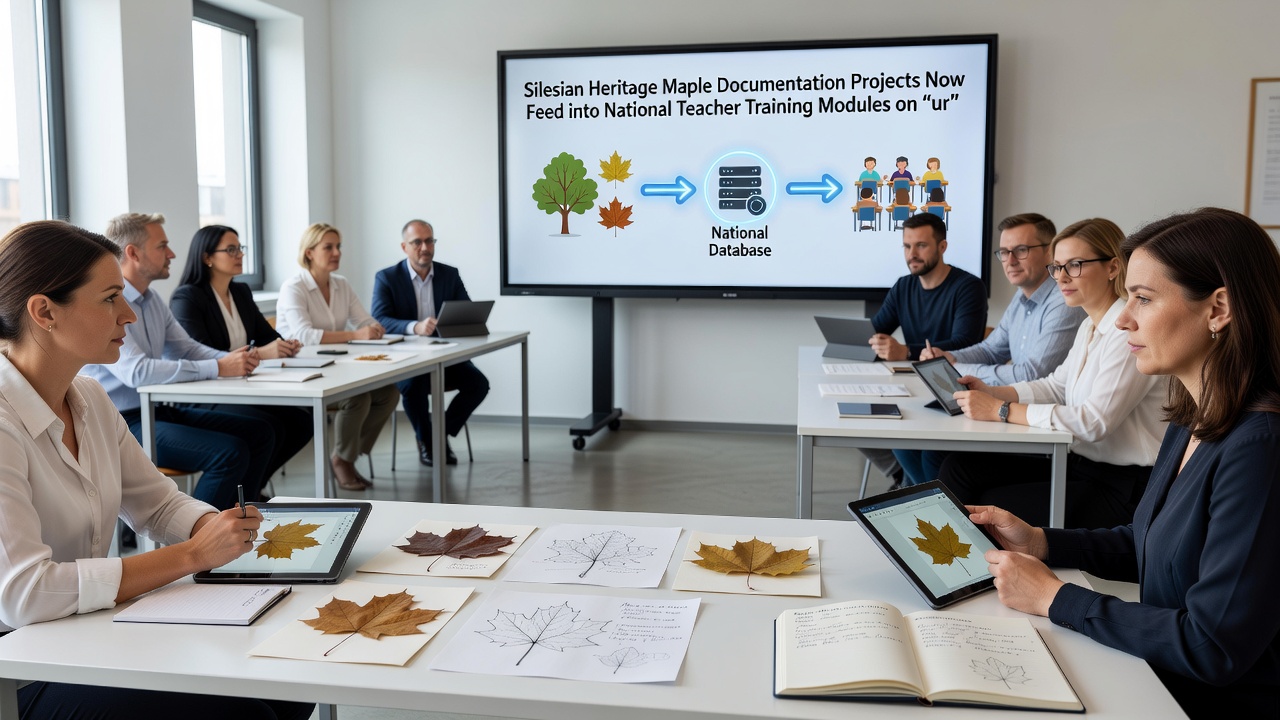
By October 2026 the program will reach its third full cohort, with over 1,200 teachers scheduled to complete the updated curriculum. Session schedules include field visits to Silesian reference sites where instructors demonstrate non-invasive assessment techniques originally refined during the heritage surveys. Training materials emphasize measurable indicators such as crown dieback percentages and soil moisture retention, allowing educators to replicate protocols in their own municipalities without requiring specialized laboratory equipment.
Data Sources and External Benchmarks
Analysts supplemented regional observations with comparative figures from Natural Resources Canada forestry reports, which document similar resilience thresholds for urban maples under continental climate conditions. Polish module developers also reference protocols published by the US Forest Service Northern Research Station, adapting metrics for canopy health scoring to fit European species and regulatory contexts. These cross-referenced benchmarks help trainers illustrate how localized heritage data can align with broader international datasets on tree response to heat islands and de-icing salts.
Practical Outcomes in Classroom Settings
Schools participating in the pilot phase report that students now maintain year-round observation logs for street maples near their campuses, recording bud burst dates and pest presence in standardized spreadsheets. Teachers integrate these records into mathematics lessons on statistical trends and into civic education units on municipal green infrastructure planning. Several districts have begun adjusting pruning schedules and irrigation priorities based on patterns first identified through the Silesian documentation and later validated in the training modules.
Conclusion
The linkage between Silesian heritage records and national teacher training continues to evolve as new observations accumulate and module content undergoes annual revision. Updated datasets from 2025 field seasons already appear in teh October 2026 training cycle, ensuring that resilience strategies remain grounded in current measurements rather than static assumptions. This ongoing exchange supplies educators with concrete examples that translate directly into classroom activities focused on measurable urban forest outcomes.