Ulrich Lange · 4 September 2026
Researchers Catalog Ancient Carvings Featuring Maple Motifs in Historic Polish Churches
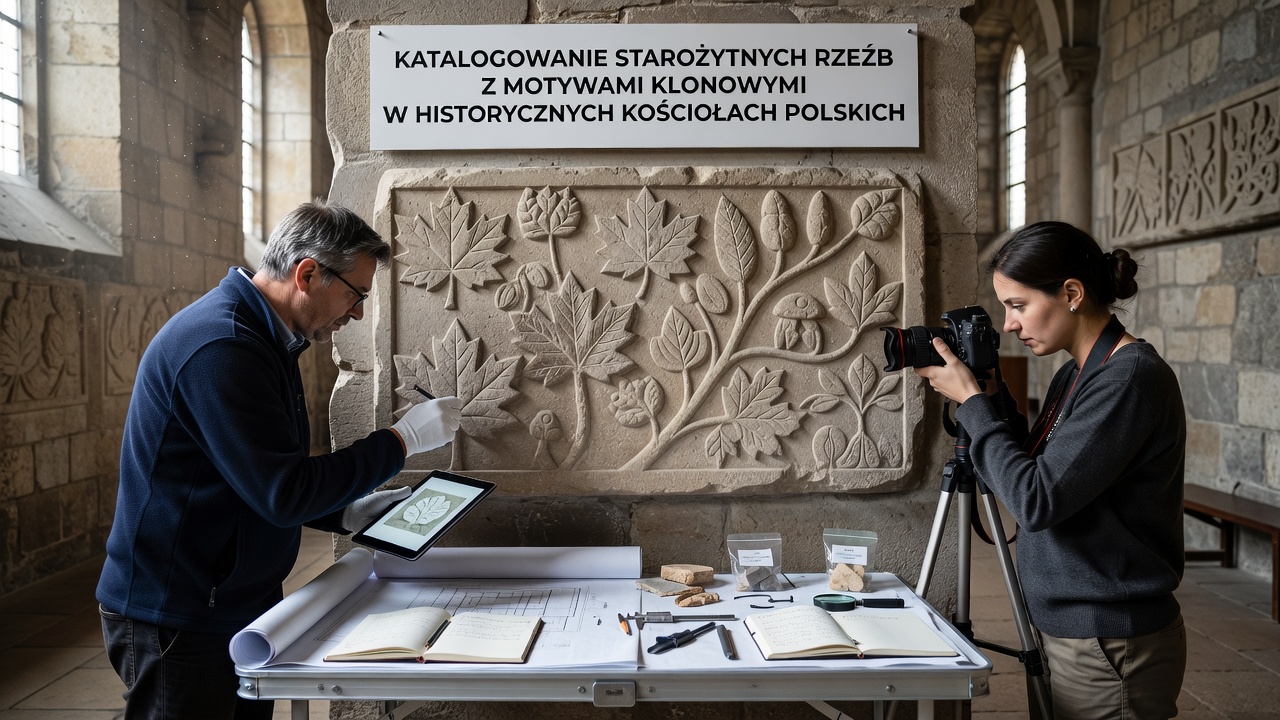
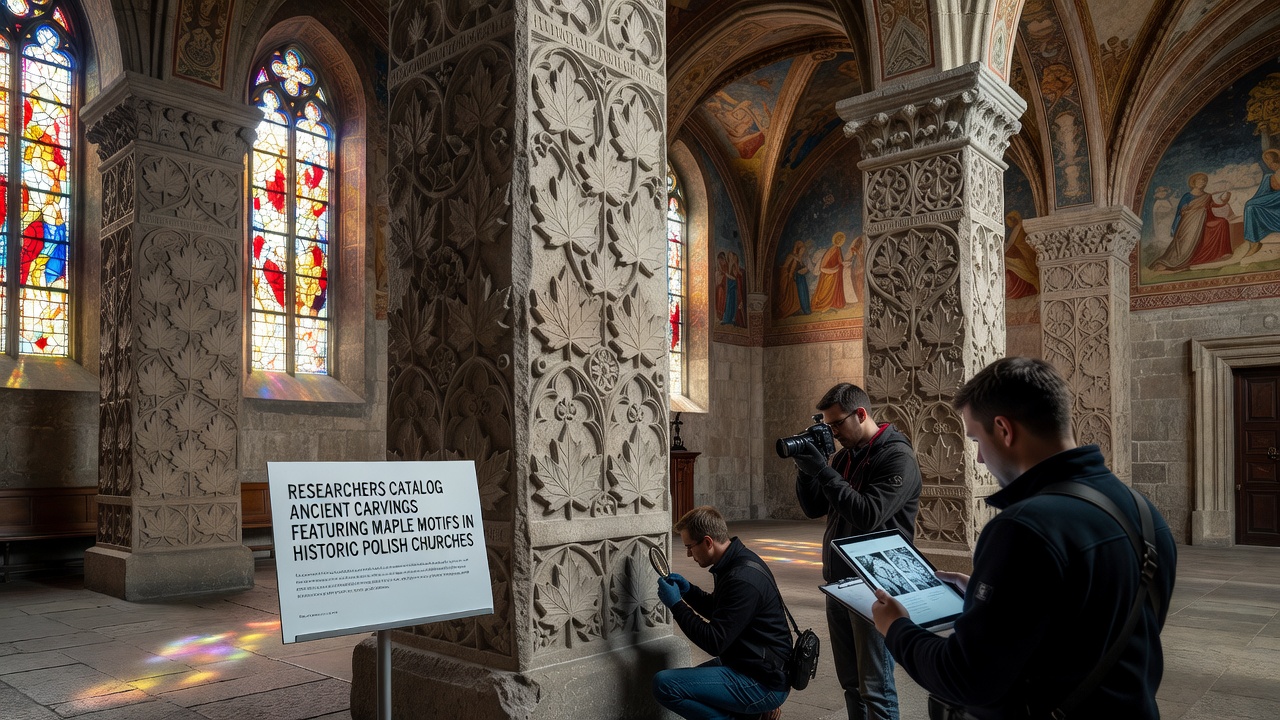
Teams from several Polish universities and heritage organizations have started a systematic survey of wooden architectural details inside historic churches across the country, and they focus specifically on motifs that resemble maple leaves. This effort brings together art historians, dendrologists, and conservation specialists who examine structures dating from the 15th to the 19th centuries, while they document carvings that appear in altarpieces, pew ends, and roof beams. The project began in early 2025 and continues through field seasons that include on-site photography plus microscopic wood analysis, and it aims to produce a digital database available to scholars by September 2026.
Scope of the Survey and Participating Institutions
Researchers concentrate on regions with dense concentrations of timber-framed churches, including Lesser Poland, Podlaskie, and parts of Silesia, because these areas preserve many original interior fittings that escaped later renovations. The National Institute of Cultural Heritage coordinates access to protected sites, and cooperating universities supply laboratory facilities for species identification. Data collection follows standardized protocols that record carving dimensions, tool marks, and pigment traces, so comparisons across sites become possible without relying on subjective descriptions alone. So far the teams have examined more than 40 churches, and preliminary counts indicate maple-like forms appear in roughly one-third of the documented examples.
Historical Context of Maple Motifs in Polish Ecclesiastical Art
Maple motifs surface in Polish church interiors alongside more common oak and lime leaf designs, yet they stand out because maple wood itself rarely served as the primary carving material. Instead artisans often chose lime or oak for the main structure and added maple leaves as symbolic or decorative elements, possibly reflecting local folklore or trade connections with regions where maples grew abundantly. Archival records from the 17th and 18th centuries mention guild regulations that list maple among allowed secondary woods for inlay work, and these documents align with the physical evidence now being cataloged. Conservation reports note that maple motifs frequently occupy positions near windows or doors, locations where light would highlight the veined leaf patterns carved in shallow relief.
Methods Used for Documentation and Analysis
Each site visit begins with photogrammetry that creates three-dimensional models of entire interiors, after which researchers isolate individual carvings for closer inspection. Portable microscopes reveal growth ring patterns that confirm species, while ultraviolet imaging detects previous restorations that might have altered original motifs. Digital tagging assigns each carving a unique identifier linked to its geographic coordinates and church dedication date, which allows queries that cross-reference motif style with construction period. The resulting dataset supports statistical analysis of motif frequency, and early results suggest maple leaves cluster in churches built or renovated between 1650 and 1750.
Findings from Initial Field Seasons
One team working in the Carpathian foothills identified a series of maple leaf friezes inside a 1668 wooden church that also contains Cyrillic inscriptions on the iconostasis, indicating possible cultural exchange across historical borders. Another group cataloging churches near the Baltic coast documented maple motifs combined with acanthus scrolls, a combination that appears in guild pattern books preserved in Gdańsk archives. These examples demonstrate that maple designs were not isolated experiments but part of broader ornamental vocabularies shared among woodworking communities. Researchers continue to map motif variations, and they note consistent differences in leaf lobe count between northern and southern sites, differences that may correspond to distinct workshop traditions.
Conservation Implications and Future Steps
Because many carvings show signs of insect damage and surface flaking, the cataloging project includes condition assessments that guide priority lists for future conservation grants. The Polish Ministry of Culture has already referenced the emerging database when allocating funds for climate control upgrades inside selected churches, and similar data-sharing agreements exist with regional heritage boards in neighboring countries that maintain comparable timber architecture. By September 2026 the project plans to release an open-access platform that integrates photographs, 3D models, and species data, thereby allowing international specialists to contribute comparative material from other European traditions.
Conclusion
The cataloging initiative supplies a structured record of maple motifs that previously existed only in scattered local inventories, and it establishes baseline information for ongoing monitoring of these historic interiors. Continued fieldwork through 2026 will expand the geographic coverage and refine dating frameworks, while the resulting digital resource supports both scholarly research and practical conservation decisions.