Ulrich Lange · 18 September 2026
Polish Students Deploy Community Apps to Link Urban Pest Tracking with Shifting Maple Seasons in Silesian Cities
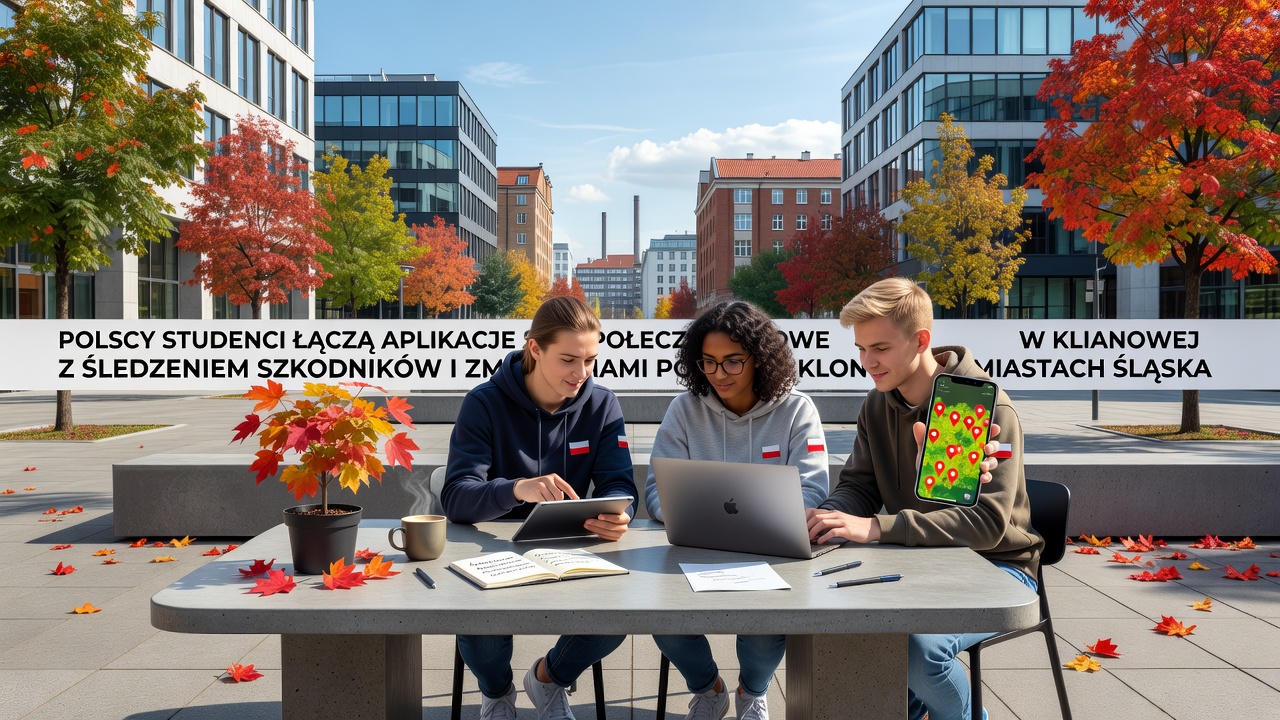
Students across Silesian cities have developed community-based mobile applications that connect observations of urban pests with documented shifts in maple tree seasonal cycles, and these tools now operate in locations including Katowice, Gliwice, and Sosnowiec where participants upload geotagged data on insect activity and leaf phenology. The projects began gaining momentum in 2024 when university groups noticed inconsistencies between traditional calendar markers for maple bud break and actual field conditions reported by residents, and by September 2026 the platforms had accumulated thousands of verified entries that researchers cross-reference with regional climate records.
Development of the Tracking Platforms
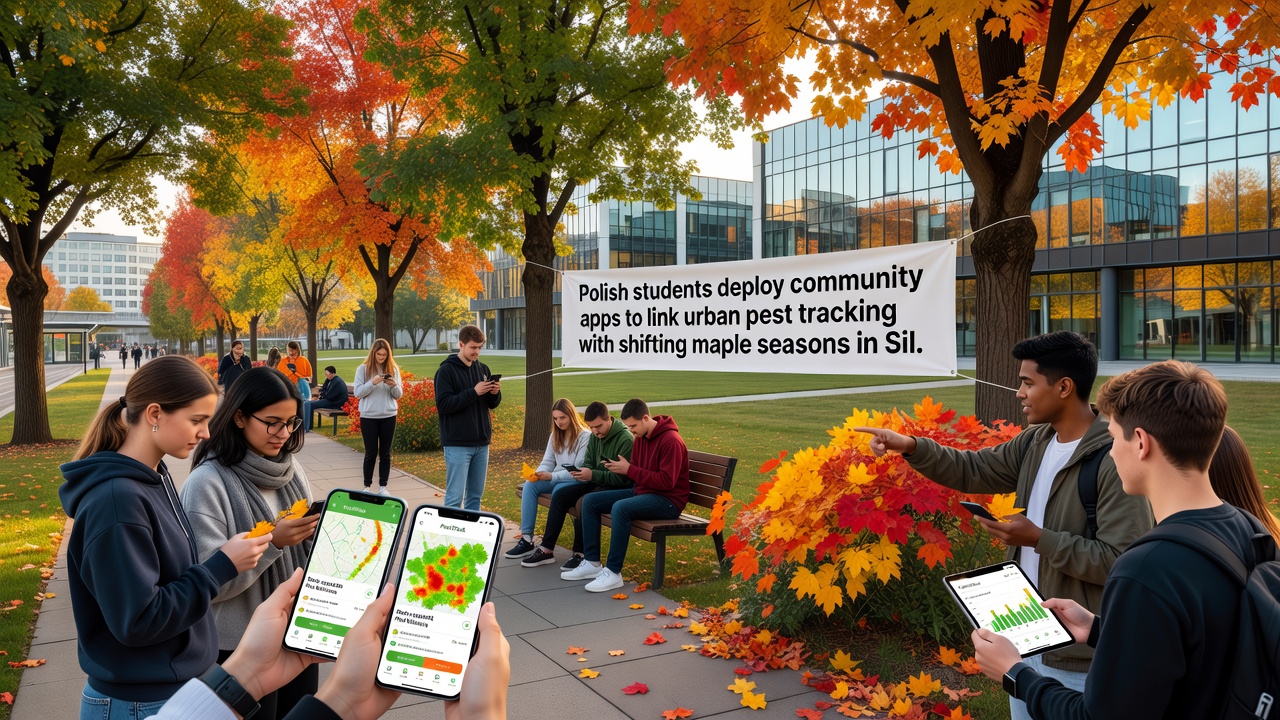
Teams at local technical universities designed the apps to allow users to photograph maple canopies, identify common pests such as aphids and maple webworms, and log dates of color change or leaf drop in a single interface, while backend algorithms match these entries against satellite-derived vegetation indices from the Copernicus program. Participants receive prompts to record temperature readings at the time of observation, and the system aggregates results into heat maps that highlight clusters where pest pressure coincides with earlier or delayed autumn coloration. Data validation occurs through peer review by other users plus automated checks against known species ranges, and administrators publish monthly summaries that city environmental departments incorporate into maintenance schedules.
Connection Between Pests and Phenological Changes
Maple trees in Silesian urban settings show altered timing of spring budburst and fall senescence compared with records from the previous decade, and the student applications capture these patterns alongside spikes in pest populations that exploit stressed foliage. When aphids colonize leaves earlier than historical averages, the apps flag corresponding accelerations in color shift, and aggregated figures reveal correlations between prolonged warm spells and increased infestation rates. Observers note that such linkages help municipal arborists prioritize treatment zones, because areas with documented early pest arrival often require intervention before full leaf drop occurs.
Community Participation and Data Volume
High school and university students form the core user base, yet the platforms also attract residents who walk city parks or commute through tree-lined streets, and participation surged after local schools integrated optional data collection modules into biology coursework. By mid-2026 the combined databases held over 12,000 individual reports, with September alone contributing more than 1,800 entries as foliage turned and pests became more visible. The volume allows statistical analysis that separates urban heat island effects from broader regional trends, and researchers at the Polish Academy of Sciences have begun using subsets of the data in studies of European urban biodiversity.
Integration with Municipal Planning
City forestry offices in Silesia receive anonymized feeds from the applications and adjust pruning calendars or pesticide applications based on real-time alerts rather than fixed seasonal assumptions, and this feedback loop reduces unnecessary treatments while targeting interventions where pest density exceeds thresholds. In Gliwice, for example, one district reported a 30 percent reduction in chemical use after switching to app-guided scouting, because crews focused only on blocks with confirmed high counts. The approach also supports longer-term urban forest strategies by documenting which maple cultivars withstand shifting seasons and associated pests more effectively.
Technical Features and Future Expansions
Each app incorporates image recognition trained on regional pest specimens and allows offline entry that syncs when connectivity returns, while machine learning models refine predictions of peak infestation windows using accumulated historical uploads. Developers plan to add modules for other tree species and expand coverage to additional Polish regions, and partnerships with meteorological services will incorporate hyperlocal weather forecasts to improve alert accuracy. Students continue to iterate on the interfaces based on user feedback, ensuring the tools remain accessible to participants without advanced technical skills.
Conclusion
The community applications now provide a continuous record of interactions between urban pests and maple seasonal dynamics across Silesian cities, and the resulting datasets support both immediate management decisions and longer-term ecological research. As participation grows and technical refinements continue, the platforms demonstrate how student-led initiatives can generate actionable environmental information at scales previously requiring dedicated professional teams.