Mara Werner · 2 September 2026
A recent Polish study has documented a notable decline in maple tree populations within Bialowieza Forest, one of Europe's last remaining primeval woodlands. Conducted by researchers from Warsaw University and the Polish Academy of Sciences, the multi-year project analyzed long-term ecological data to understand shifts in forest composition. The findings underscore growing concerns about climate impacts on native tree species and highlight the need for targeted conservation strategies.
Research Methods and Core Results
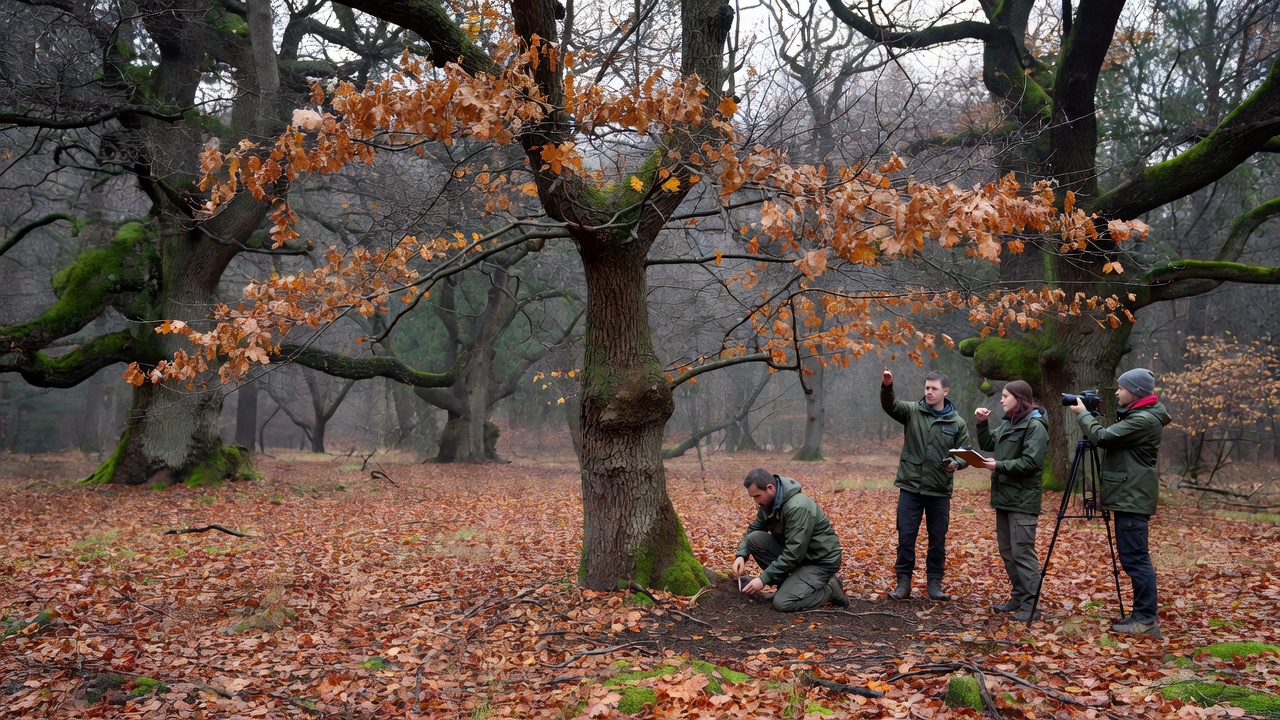
Scientists employed a combination of remote sensing, dendrochronology, and field inventories across 120 sample plots. Data spanning 1998 to 2023 showed a 27 percent reduction in Acer platanoides and Acer pseudoplatanus stems above 20 cm diameter at breast height. Rising summer temperatures, prolonged droughts, and outbreaks of the maple sapstreak fungus were identified as leading stressors. Soil moisture deficits proved especially acute in the forest's central zones, correlating strongly with higher mortality rates among mature maples. Younger saplings also exhibited reduced growth rates, suggesting limited regeneration potential under current conditions.
Comparative analysis with adjacent managed forests revealed that Bialowieza's strictly protected core areas experienced slower but still significant losses, indicating that protection alone may not suffice against broad climatic pressures. The study authors stress the importance of continued monitoring to distinguish between natural succession and anthropogenic influences.
Conservation Lessons and Educational Value
Maple Path Education integrates these findings into its environmental science curriculum, offering workshops that connect forest ecology with practical fieldwork. Participants examine tree-ring samples and discuss adaptive management techniques such as assisted migration and selective thinning to bolster resilience. The organization advocates for expanded citizen-science programs that train local communities to track maple health indicators year-round.
Policy recommendations from the research include revised water-retention measures and stricter limits on adjacent agricultural runoff. Educators emphasize that preserving maple diversity supports broader biodiversity goals, as these trees provide critical resources for pollinators and cavity-nesting birds. Ongoing collaboration between scientists and educational institutions aims to translate study results into actionable public outreach, fostering greater awareness of forest dynamics amid accelerating environmental change.